Condensation or Rising Damp
Knowing which of the three types of damp you actually have decides whether ventilation, a roof repair or an independent survey is the right next step.
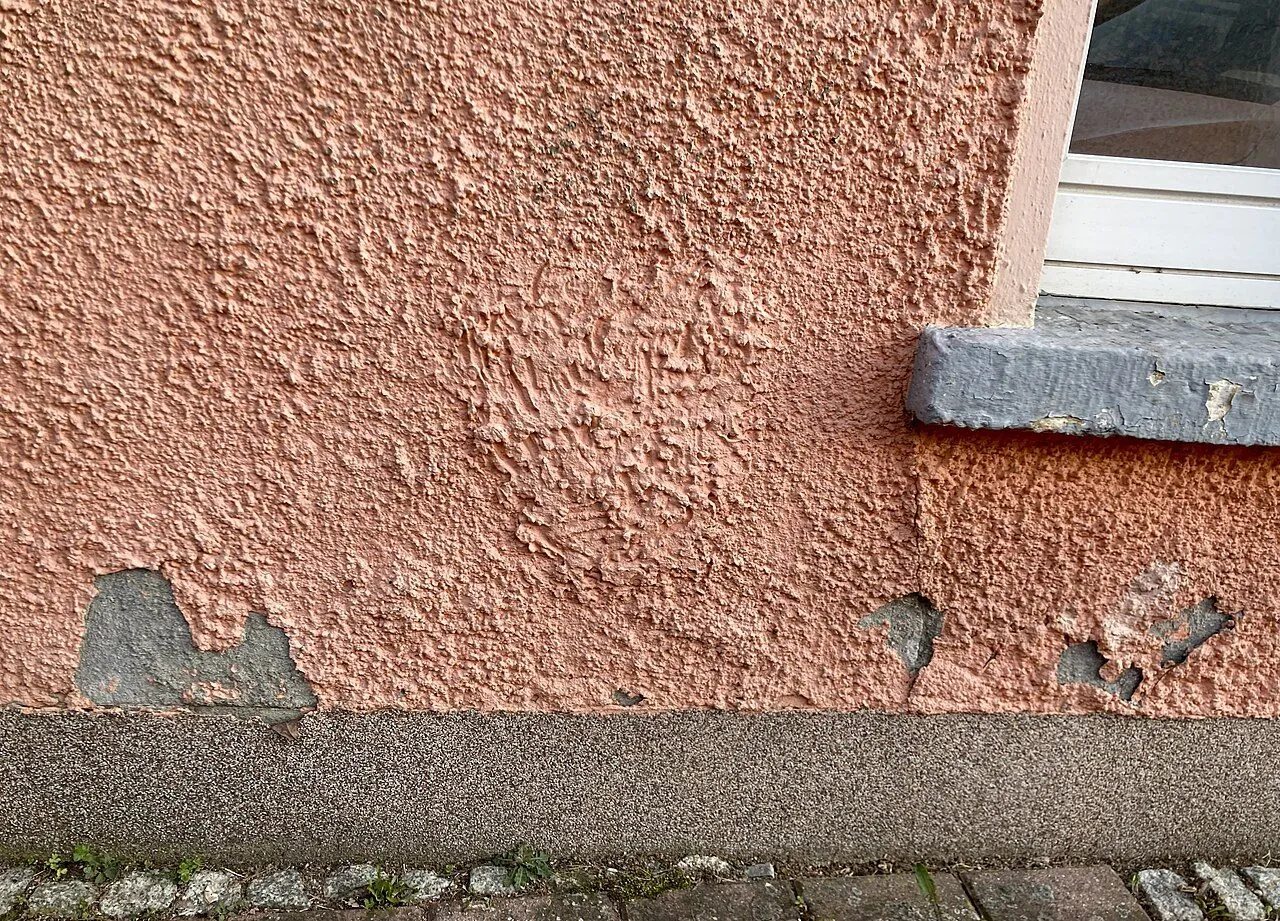
Photo: Kai Kemmann via Wikimedia Commons, CC BY-SA 4.0
Most damp patches in UK homes turn out to be condensation or penetrating damp rather than rising damp, and telling the three apart determines which fix actually works.
The three kinds of damp
Condensation forms on cold surfaces, such as external walls and windows, from everyday moisture released by cooking, drying clothes and bathing; poor ventilation makes it worse, which is why it is more noticeable in winter. It is treated by improving airflow, not by any kind of damp-proofing. Penetrating damp comes in from outside, usually through a defective roof, damaged guttering, failed render or brickwork, or a leaking pipe, and tends to affect higher walls and ceilings; because the moisture is coming from outside, more ventilation will not solve it. Rising damp is ground moisture drawn up through a wall, usually seen low down on ground-floor walls with a "tide mark" and salt staining. It is also the most over-diagnosed of the three: Historic England's 2026 review of around 1,500 damp investigations found genuine rising damp in only about 4% of cases, with most stains blamed on rising damp turning out to be condensation or penetrating damp instead.
Getting a fair diagnosis
Because rising damp is so often misdiagnosed, the Royal Institution of Chartered Surveyors (RICS) advises getting an assessment from an independent surveyor with no financial interest in selling treatment work, rather than from a firm offering a free survey that then recommends its own damp-proofing course. For older and listed buildings, Historic England goes further, warning that chemical damp-proofing can trap moisture in solid walls that were designed to let it evaporate, and that any treatment should be checked against the building's construction first.
Health risks and rights if you rent
Mould linked to damp can trigger allergic reactions, and the NHS says it can worsen asthma and chest infections and cause sore eyes and skin problems; babies, children and pregnant women are most at risk. Tenants in social housing in England have specific rights under Awaab's Law, in force since 27 October 2025: landlords must investigate a significant damp or mould hazard within 10 working days, give the tenant written findings within 3 working days, and complete safety works within 5 working days, with emergencies made safe within 24 hours. If a home cannot be made safe in that time, the landlord must offer suitable alternative accommodation. This duty currently applies only to social landlords in England, not to private tenants or to the rest of the UK, though the government has said it will consult on extending it.
Check the pattern first: a stain low down on a ground-floor wall with salt marks may be rising damp, but only a proper survey can confirm it; damage higher up after a leak or storm points to penetrating damp; a general problem in a poorly ventilated room is usually condensation. When in doubt, get an independent survey rather than one from a firm that also sells the cure.
Sources checked
- historicengland.org.uk/advice/technical-advice/buildings/damp-in-historic-buildings
- www.gov.uk/government/publications/awaabs-law-guidance-for-tenants-in-social-housing/awaabs-law-guidance-for-tenants-in-social-housing
- www.nhsinform.scot/healthy-living/indoor-health/damp-and-mould-indoors
- www.rics.org/consumer-guides/damp-and-mould