Bulky Waste Collection
Council collections, recycling centres and registered carriers are the legal routes for bulky waste, and each leaves you a paper trail worth keeping.
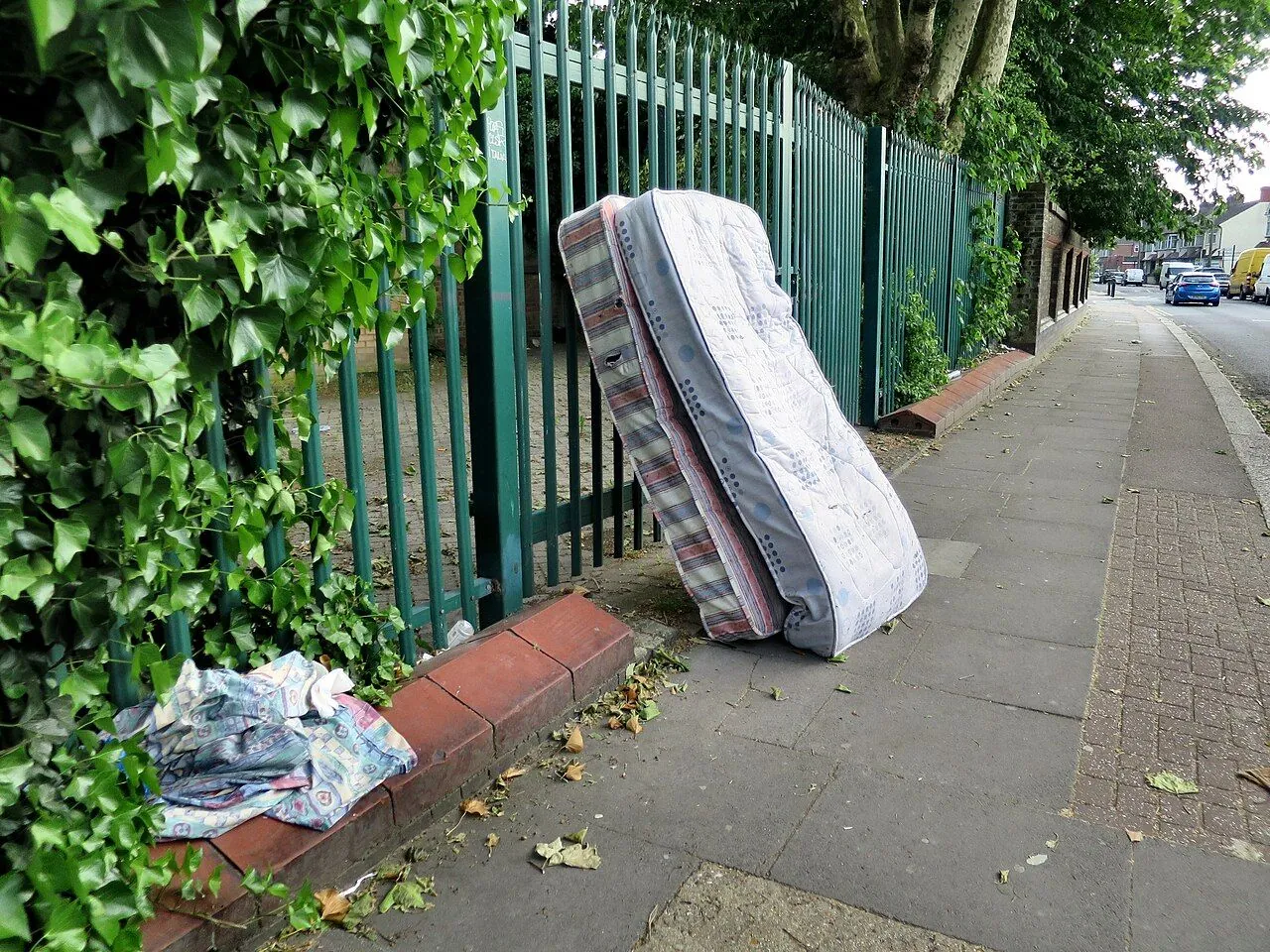
Photo: Alan Stanton via Wikimedia Commons, CC BY-SA 2.0
For a sofa, mattress or fridge you no longer want, the legal routes in England are a council bulky waste collection, a household waste recycling centre, a charity that collects reusable furniture, or a registered waste carrier. Standard rubbish and recycling collections will not take large items, and handing them to just anyone can leave you liable if the waste ends up fly-tipped.
Council collections and recycling centres
Most councils offer a bulky waste collection for large household items such as sofas and fridges, run alongside, but separate from, the usual rubbish and recycling rounds. What is collected, whether there is a charge, how many items you can put out, and how you book, all vary from council to council, so check your own council's website before assuming the service works a particular way. Household waste recycling centres are the other official route: they take a wide range of household items, though acceptance rules for particular items again vary by council, so it is worth checking opening hours and what a centre will take before you make a trip. Many local charities also collect or accept furniture in usable condition for reuse rather than disposal.
If someone else takes the waste away
If you pay someone to take waste from your home, the law places a duty of care on you as the householder: under the Environmental Protection Act 1990 and related regulations, you must take reasonable steps to ensure your waste goes only to an authorised person. In practice, that means checking the collector on the Environment Agency's public register of waste carriers, brokers and dealers before they take anything; a genuine carrier operating in England has a registration number starting with "CB" and should show it if asked, and a carrier registered in Scotland or Wales is also authorised to work in England. Ask for their registration details and keep a note of them, along with what was collected and when. If you fail to take reasonable care and your waste is later found fly-tipped, you can be issued a fixed penalty notice; GOV.UK confirms that in England the legal maximum for a householder's breach of this duty is £600, and the legal maximum fixed penalty for fly-tipping itself is £1,000, though the current figures should always be checked on GOV.UK as they can change.
Electricals and upholstered furniture
When you buy a new electrical item, many retailers must offer to take back a similar old item of yours free of charge under the WEEE (Waste Electrical and Electronic Equipment) regulations, either in store or through a separate collection scheme; ask the retailer how their take-back scheme works when you order. Upholstered furniture such as sofas and armchairs sold second-hand by a business, including charities, must still meet the fire-resistance standards set out in the Furniture and Furnishings (Fire) (Safety) Regulations 1988, which is why some charities decline certain donated items rather than pass on a fire risk.
The safest rule for a householder clearing bulky items: know where each item is going, use a council service, recycling centre, reputable charity or a carrier you have checked on the Environment Agency register, and keep the details in case anyone ever asks where your waste ended up.